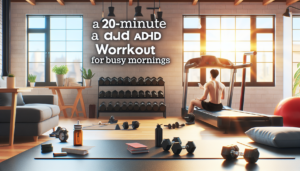
Starting your day with a short, structured workout can dramatically improve focus, energy, and mood for people with ADHD. A 20-minute morning routine is long enough to trigger neurochemical benefits and short enough to be sustainable on low-motivation days.
This guide gives a complete, ADHD-friendly 20-minute plan you can use tomorrow, plus clear habit strategies, modifications, and tracking tips. Follow the step-by-step outline to make this routine automatic within 2-4 weeks.
Why a 20-minute morning workout works for ADHD
Brief, consistent exercise increases dopamine and norepinephrine, two neurotransmitters tied to attention and motivation. For many people with ADHD, those chemical changes translate to clearer thinking, less reactivity, and more productive mornings.
Short sessions also reduce decision fatigue and lower the barrier to starting. A predictable format and simple progress markers make it easier to keep showing up.
Core principles for ADHD-friendly sessions
- Structure beats spontaneity – Use the same warm-up, main set, and cooldown order to build a routine cue.
- High engagement – Alternate movement patterns to limit boredom and sustain interest.
- Micro-goals – Aim for small wins: finish the warm-up, complete one circuit, or beat yesterday’s reps.
- Minimal equipment – Bodyweight plus dumbbells or a resistance band keeps decisions simple.
20-minute morning workout template
Use this template daily. Total time: 20 minutes. Set a timer and follow the blocks below. Adjust intensity based on fitness level and medication timing.
0-4 minutes: Dynamic warm-up
Move with intent to increase heart rate and prepare the nervous system. Example sequence:
- 30 seconds jumping jacks or high knees
- 30 seconds arm circles plus shoulder pass-throughs
- 30 seconds walking lunges or reverse lunges
- 60 seconds leg swings and hip circles
- Remaining time: 30-60 seconds of light jogging in place
4-16 minutes: Main circuit – strength and cardio hybrid
Do the circuit below 3 times with 30-45 seconds per exercise and 15-30 seconds rest between moves. Rest 60 seconds between full rounds if needed.
- Bodyweight squats or goblet squats with a dumbbell – 30-45 seconds
- Push-ups or incline push-ups – 30-45 seconds
- Mountain climbers or plank shoulder taps – 30-45 seconds
- Reverse lunges alternating legs – 30-45 seconds
- Standing band rows or bent-over dumbbell rows – 30-45 seconds
This mix keeps both large-muscle strength and cardio stimulus, which together optimize arousal and cognitive performance for the morning.
16-20 minutes: Focused cooldown
Finish with breathing and mobility to consolidate calm and readiness for work. Example:
- 60 seconds standing forward fold breathing
- 60 seconds child pose or seated hamstring stretch
- 60 seconds chest opener with deep inhales and slow exhales
Sample variations by goal
Swap exercises to match goals and physical limits. Here are three focused 20-minute options you can rotate through the week.
Focus-priority (low impact)
- Warm-up: marching with arm swings
- Circuit: seated band rows, chair squats, bird dogs, glute bridges, standing calf raises
- Cooldown: neck mobility and diaphragmatic breathing
Energy-priority (higher intensity)
- Warm-up: easy jump rope or simulated rope
- Circuit: kettlebell swings, alternating jump lunges, burpee-to-step-back, push-up to shoulder tap
- Cooldown: slow walk and progressive muscle relaxation
Strength-priority
- Warm-up: banded glute activation and thoracic rotations
- Circuit: goblet squats, inverted rows, Romanian deadlift with dumbbells, overhead press
- Cooldown: hamstring and pec stretch
Timing with ADHD medication and energy cycles
Experiment with timing relative to stimulant medication. Some people do best exercising 30-60 minutes before medication for a natural dopamine boost. Others prefer exercising after medication onset to capitalize on improved focus.
Track subjective energy and attention for 1-2 weeks and adjust. Record time of day, medication timing, perceived focus, and effort level to find the best window.
Habit strategies to make it stick
Sustainability depends on simple cues and immediate rewards. Use the five-minute rule: commit to just five minutes if motivation is low. Most days you will continue to finish the 20 minutes after starting.
- Anchor to a routine – Put the workout after a stable activity like brushing teeth or pouring morning coffee.
- Visual cue – Lay out clothes and any equipment the night before to remove friction.
- Accountability – Use a daily check box, a workout partner, or a short video log for consistency.
- Immediate reward – Have a preferred healthy beverage or 2-3 minutes of a favorite podcast only after the workout.
Tracking progress and scaling
Track 3 simple metrics: days completed per week, circuit rounds done, and perceived focus after the session on a 1-10 scale. Reviewing these weekly highlights progress and signals when to increase intensity.
Progression options: add 5-10 seconds per exercise, reduce rest by 5-10 seconds, increase weight slightly, or add one extra round every 7-10 days.
Common barriers and fixes
- Low motivation: Use the five-minute start rule and a visible check box to turn action into a habit.
- Too distracted: Use a countdown timer and a short, energetic playlist with songs that are 2-3 minutes long.
- Time conflicts: Keep a standing 20-minute window in the morning calendar to protect the routine.
- Physical pain: Swap high-impact moves for low-impact alternatives and consult a professional for persistent pain.
Simple nutrition tips for morning focus
If you exercise before breakfast, have 10-15 grams of quick carbs like a banana or a small energy bite to avoid drop in blood sugar. After the workout, prioritize a protein-rich meal with healthy fat and fiber to stabilize attention and energy.
Hydration matters. Drink 300-500 ml of water before the session and keep a bottle nearby to sip between rounds.
Safety and medical considerations
If you have cardiovascular concerns, hypertension, or are new to exercise, consult your healthcare provider before starting. Pay attention to heart rate, dizziness, or unusual chest discomfort and stop if symptoms arise.
Modify intensity on days you feel overly fatigued or when medication effects are strong. The routine should support daily function, not add stress.
Frequently Asked Questions
Is 20 minutes enough exercise for ADHD benefits?
Yes. Twenty minutes of moderate to vigorous activity reliably increases dopamine and norepinephrine and can improve attention and mood. Repeat daily or most days for cumulative benefits.
Should I exercise before or after taking ADHD medication?
It depends on your response. Some prefer exercising prior to medication for a natural boost, while others get better focus exercising after medication. Track how you feel and adjust timing accordingly.
What if I can only do 5-10 minutes some mornings?
Short sessions are better than none. Use the five-minute rule to get started and accept shorter sessions on low-energy days. Consistency matters more than duration for habit formation.
Can I replace strength moves with cardio if I dislike weights?
Yes. The key is movement that raises heart rate and engages major muscle groups. Swap strength moves for intervals of brisk stepping, cycling, or bodyweight circuits to get similar cognitive benefits.
How long until I notice cognitive benefits?
Many people feel an immediate lift in focus and mood within 10-30 minutes after the workout. More consistent improvements in daily attention and executive function typically appear within 2-4 weeks of regular practice.
How do I maintain this routine while traveling?
Use bodyweight versions of the circuit and pack a resistance band. Choose a consistent morning cue like brushing teeth in the hotel to trigger the short session even on travel days.
Conclusion
A 20-minute morning workout is a practical, evidence-based strategy to improve focus, energy, and mood for people with ADHD. The template in this guide gives a reliable, low-decision routine you can start tomorrow and scale over weeks.
Focus on structure, small wins, and consistent tracking. With the habit strategies and sample variations above, you can build a sustainable morning ritual that supports attention and productivity all day.
Disclaimer
This blog is for informational and educational purposes only and does not constitute medical, mental health, or professional advice. The content provided focuses on fitness, exercise routines, lifestyle strategies, and general wellness information related to ADHD and overall performance. Individual abilities, health conditions, and responses to exercise may vary.
Always consult with a qualified healthcare provider or fitness professional before starting any new exercise program, making significant changes to your physical activity, diet, or routine, or if you have questions about your specific health or medical condition, including ADHD or other health concerns.
If you are experiencing a medical emergency, call 911 or your local emergency services immediately. The information on this website does not create a doctor-patient relationship and should not be used as a substitute for professional medical advice, diagnosis, or treatment.