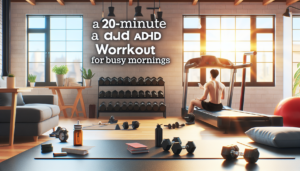
Starting a morning workout when you have ADHD can feel impossible some days and easy on others. The right approach reduces friction, supports focus, and boosts energy for the rest of the day.
This guide shows step-by-step how to build a reliable, ADHD-friendly morning routine that fits 20-40 minutes, uses structure to beat decision fatigue, and includes practical fixes for common barriers like low motivation and inconsistent sleep.
Follow the sample routines, habit strategies, and nutrition tips below to create a sustainable plan that improves focus, mood regulation, and daily productivity.
Why ADHD-friendly morning workouts work
People with ADHD benefit from routines that limit choices and create fast feedback. A short, consistent morning workout increases dopamine, improves mood, and makes later tasks easier to start.
Structure matters more than duration. A 20-minute targeted session done five times a week beats a 90-minute session done once. Use predictable sequences and visible progress markers to reinforce habit formation.
Core principles to design your routine
Design your workout around three core principles: minimal decisions, built-in novelty, and immediate rewards. These reduce activation energy and keep engagement high.
- Minimal decisions – Pre-plan each session so you do not choose exercises in the moment.
- Built-in novelty – Rotate small elements: tempo, hand position, or a new mobility move once a week.
- Immediate rewards – Track completion with a calendar check or a five-minute win activity after the workout.
Sample 20-30 minute ADHD-friendly morning routines
20-minute strength circuit – fast and grounding
Purpose: Build focus and full-body strength with predictable sets. Equipment: none or a pair of dumbbells.
- Warm-up 3 minutes – march in place, shoulder circles, hip swings.
- Circuit – repeat 3 rounds, 40 seconds work, 20 seconds rest:
- Push-ups or incline push-ups
- Goblet squat or bodyweight squat
- Single-arm dumbbell row or bent-over row
- Plank hold for 40 seconds or forearm plank for 20-40 seconds
Progression: add 5 more seconds work per exercise each week or add one extra round every 2 weeks. Use a timer app for consistent cadence.
25-minute cardio and focus mix
Purpose: Boost alertness and mood with bursts of movement. Equipment: jump rope optional, room for short sprints.
- Warm-up 4 minutes – dynamic movement, toe taps, light jogging.
- Intervals – 5 rounds, 2 minutes each: 30 seconds high intensity, 90 seconds moderate recovery.
- High intensity options: jump rope, fast bodyweight squat jumps, sprint in place
- Recovery: brisk walk, controlled step-outs, deep diaphragmatic breathing
Finish with 3 minutes of mobility and 2 minutes of deep breathing to anchor attention.
10-15 minute movement-break routine for busy mornings
Purpose: Quick dopamine and energy reset when time is limited. Great on low-focus days.
- 2 minutes wake-up mobility – neck rolls, ankle circles.
- 8 minutes AMRAP (as many rounds as possible): 8 air squats, 6 push-ups, 10 alternating lunges.
- 2 minutes cool-down and breathwork.
Consistency tip: commit to the 10-15 minute block even if you feel you can do more. Stopping early but consistently is better than skipping.
Practical habit-building strategies
Turn intent into action using simple systems that reduce friction. These strategies come from behaviour science and real ADHD-friendly practices.
- Prepare the night before – set out clothes, fill water bottle, and place shoes by the door. This cuts morning decisions by several steps.
- Use a visible checklist – put a printed checklist on the wall or a habit app with one tap completion. Visual cues trigger action.
- Body doubling – exercise with a friend, coworker, or online group. Shared start times increase completion rates.
- Timer and music – use a 20-minute timer and an upbeat playlist. The timer enforces structure; music raises motivation.
- Two-minute rule – start with two minutes of movement. Once you begin, inertia often carries you through the whole session.
Nutrition and energy hacks for morning workouts
Small nutrition changes stabilize energy and sharpen focus. You do not need a full meal before every workout; choose based on intensity and time since your last meal.
- Hydration – drink 200-300 ml water on waking. Dehydration reduces cognitive clarity and energy.
- Quick pre-workout options – a banana or 150 g Greek yogurt provides 10-15 g protein and fast carbs ideal for 20-40 minute sessions.
- Caffeine timing – a small coffee 20-40 minutes before intense workouts can boost alertness. Avoid excessive caffeine late in the morning if it disrupts later sleep.
- Post-workout recovery – aim for 20-30 g protein within 60 minutes to support muscle and mood. Examples: protein shake, eggs and toast, or cottage cheese with fruit.
Tracking progress and adjusting for ADHD
Keep tracking simple and rewarding. Complex metrics reduce adherence and increase friction.
- Use a habit streak – mark each completed workout on a calendar. Visual streaks provide instant reward.
- One KPI – choose one key performance indicator like “workout days per week” or “total weekly minutes” and focus there.
- Micro-progress – log small wins: more reps, less rest, or adding one extra round. Celebrate these wins weekly.
- Adjust frequently – if you miss sessions, reduce time – not frequency. For example, cut a 30-minute goal to 15 minutes for 7 days to rebuild habit momentum.
Common barriers and practical fixes
Anticipate common problems and apply specific countermeasures rather than relying on willpower alone.
- Low motivation – use body doubling or a quick 2-minute start rule to overcome inertia.
- Morning brain fog – hydrate, do light mobility first, then progress to higher intensity once alertness rises.
- Time pressure – choose the 10-15 minute movement-break routine and stack it onto an existing morning habit like brushing teeth or showering.
- Overwhelm from choices – keep a one-page plan with two options: strength or cardio. Flip a coin or pre-schedule daily.
Frequently Asked Questions
How long should an ADHD-friendly morning workout be?
A practical range is 10-40 minutes depending on schedule and goals. Aim for consistency first; short daily sessions often produce better adherence and cognitive benefits than long infrequent sessions.
Can I build strength if I am only consistent for 20 minutes?
Yes. Focused 20-30 minute circuits, progressive overload, and 3-5 weekly sessions produce measurable strength gains over time. Use simple progress markers like added reps, rounds, or slight weight increases.
What should I eat before a morning workout with ADHD?
Choose easily digestible options like a banana, a small yogurt, or a slice of toast with nut butter if you need quick fuel. For short low-intensity sessions you can often train fasted while staying hydrated.
How do I stay motivated on low-focus days?
Use strategies like body doubling, a two-minute start rule, a visible checklist, or altering the session to a 10-15 minute movement break. Small wins reduce resistance and build momentum for future days.
Is morning exercise better for ADHD than evening workouts?
Morning exercise often helps with focus and sets a productive tone, but evening workouts can also be effective for mood and sleep if scheduled consistently. Choose the time you can maintain long term and align with medication and sleep patterns.
Can ADHD medication affect my workout performance?
Yes, stimulant medications can change heart rate, energy levels, and perceived exertion. Monitor how you feel, adjust intensity, and consult your clinician if you have new cardiovascular symptoms or concerns.
Building an ADHD-friendly morning workout is about lowering friction, designing predictable routines, and celebrating small wins. Start with a short plan, prepare the night before, track your streaks, and adjust as needed. With consistent structure and a few targeted tactics you will see improvements in focus, mood, and daily productivity.
Disclaimer
This blog is for informational and educational purposes only and does not constitute medical, mental health, or professional advice. The content provided focuses on fitness, exercise routines, lifestyle strategies, and general wellness information related to ADHD and overall performance. Individual abilities, health conditions, and responses to exercise may vary.
Always consult with a qualified healthcare provider or fitness professional before starting any new exercise program, making significant changes to your physical activity, diet, or routine, or if you have questions about your specific health or medical condition, including ADHD or other health concerns.
If you are experiencing a medical emergency, call 911 or your local emergency services immediately. The information on this website does not create a doctor-patient relationship and should not be used as a substitute for professional medical advice, diagnosis, or treatment.