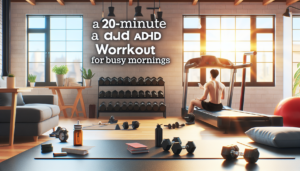
Starting your day with a short, structured workout can improve focus, mood, and energy for people with ADHD. The goal is not to train for a competition but to create a predictable, engaging routine that primes the brain for concentration and reduces mid-morning fatigue.
This guide lays out clear principles, a ready-to-use 30-minute morning routine, nutrition tips, habit-building tactics, and easy modifications based on medication timing or low energy. Use the concrete examples and timing cues to make your routine repeatable and effective.
Why ADHD-Friendly Workouts Work
Exercise triggers multiple neurochemical changes that help with ADHD symptoms. Short bursts of aerobic activity increase dopamine and norepinephrine, which support attention and task initiation.
Strength training and complex movement improve working memory and executive control over time. Combining variety, novelty, and structure helps sustain motivation and reduces avoidance.
Key Principles for Morning Routines
Design your workout around these principles to match ADHD needs. Keep routines short, varied, and time-boxed. Use external cues and simple progression rules.
- Time-boxing: Limit total session time to 20-40 minutes to prevent mental fatigue.
- High salience: Choose movements that are fun or feel meaningful to you to increase engagement.
- Variety with repetition: Rotate exercises weekly but keep the same session structure so you know what to expect.
- External structure: Use timers, playlists, or a coach app to guide transitions and reduce decision friction.
- Progressive overload: Increase reps, sets, or intensity every 2-4 weeks to maintain gains and novelty.
Sample 30-Minute ADHD Morning Workout
This 30-minute routine blends cardio, strength, and mobility. It is scalable and designed to fit medication timing and energy levels. Warm-up is brief but specific, and each block is time-limited to prevent staring at the clock.
- Warm-up – 5 minutes: 60 seconds jump rope or high knees, 60 seconds arm circles and leg swings, 2 x 30 seconds of bodyweight squats and inchworms. Focus on movement more than perfection.
- Strength Circuit – 12 minutes: Perform the circuit below twice with 45 seconds work and 15 seconds rest per station. Move quickly between stations to keep heart rate up.
- Push-ups or incline push-ups – 45 seconds
- Goblet squat or bodyweight squat – 45 seconds
- Single-arm dumbbell row or band row – 45 seconds each side
- Plank with shoulder taps – 45 seconds
- Cardio Interval – 8 minutes: Use a bike, treadmill, or bodyweight Tabata. 20 seconds hard, 10 seconds easy, repeat 8 rounds. If low-impact is needed, substitute brisk fast-paced step-ups.
- Cool-down & mobility – 5 minutes: 2 minutes walking to bring heart rate down, then 3 minutes of hip flexor stretch, chest opener, and deep diaphragmatic breathing for focus.
Example weekly plan: Monday/Wednesday/Friday use the routine above. On Tuesday and Thursday, do a 20-minute movement session focused on yoga flow or outdoor walk to maintain consistency and avoid burnout.
Modifications Based on Medication and Energy
Adjust timing and intensity based on stimulant or nonstimulant medication. If you take stimulants in the morning, aim for moderate-intensity work 30-90 minutes after dosing to capitalize on improved focus.
If you are not medicated or have low energy, split the session into two micro-sessions – 10 minutes of movement on waking and another 10-15 minutes mid-morning. This reduces activation threshold and increases adherence.
Nutrition and Hydration for Morning Workouts
Fueling matters for cognitive performance and sustained energy. For short 20-40 minute sessions, a small pre-workout snack can help if you wake hungry.
- Pre-workout option: A banana with 1 tablespoon nut butter or 6-8 oz yogurt. Easily digestible carbohydrates prevent lightheadedness.
- Post-workout: Prioritize 15-25 grams protein plus carbohydrates within 60 minutes. Example: Greek yogurt with berries, or a protein shake and an apple.
- Hydration tip: Start with 8-12 oz water on waking and sip during your session. Add a pinch of salt if you sweat heavily.
Habit Strategies to Make It Stick
People with ADHD are more likely to start and continue routines that reduce friction and increase immediate reward. Use these tactics to convert intention into action.
- Prepare the night before: Lay out clothes, set the playlist, and place water beside your bed so initiation is simpler.
- Use timers and alarms: A 5-minute countdown to start removes decision paralysis. Set a hard stop so the session feels achievable.
- Accountability: Use a workout buddy, an online class, or a coach app that tracks streaks. External accountability is powerful for ADHD.
- Reward chaining: Pair the workout with a small immediate reward, such as a favorite shower routine or a coffee you only have after finishing the session.
- Visual cues: Put a checklist on your bathroom mirror or use a habit tracker app with visible streaks to sustain motivation.
Tracking Progress and Adjusting
Track three simple metrics: session completion, perceived focus after the workout, and a strength or endurance measure. Use a small notebook or habit app to log these weekly.
If your sessions feel plateaued or boring after 3-4 weeks, rotate two exercises per movement pattern and increase intensity or time by 10-20 percent. Keep changes small to avoid decision overload.
Safety and Practical Tips
Always prioritize movement quality over quantity. If you feel dizzy, stop, rest, and reassess hydration and food intake. Consult a healthcare provider before starting a new program if you have cardiac concerns or other medical issues.
Use simple cues to avoid perfectionism. If you miss a morning, do a 5-10 minute reset walk rather than skipping movement entirely.
Frequently Asked Questions
How long should an ADHD morning workout be?
Most effective sessions are 20-40 minutes. Shorter workouts reduce avoidance and are easier to sustain while still boosting dopamine and focus.
What time should I exercise if I take ADHD medication?
Aim to exercise 30-90 minutes after taking stimulant medication so you benefit from improved focus and reduced jitteriness. Test timing and intensity to find your best window.
Can short workouts actually improve attention?
Yes, brief aerobic or combined workouts increase neurotransmitters linked to attention and mood. Even 10-20 minutes of structured movement can have measurable benefits.
What if I have low motivation in the morning?
Use external cues like alarms, pre-laid clothes, and a 2-minute start rule to get moving. Splitting sessions into micro-workouts can lower the activation barrier.
Should I prioritize strength or cardio for ADHD?
Both are beneficial; combine them. Strength training builds executive function over time, while cardio gives immediate boosts in arousal and focus. Alternate or combine within one session.
How do I prevent workouts from getting boring?
Rotate exercises every 2-4 weeks, change music or location, and add gamified goals like intervals or AMRAPs. Small, planned changes keep novelty high without breaking structure.
Conclusion
Building an ADHD-friendly morning workout is about creating a repeatable, low-friction routine that combines novelty with reliable structure. Use timers, external cues, short time blocks, and clear progression rules to sustain practice.
Start small, track your focus and energy, and adjust intensity and timing based on medication and daily rhythms. With consistent practice, these morning sessions can meaningfully improve attention, mood, and productivity.
Disclaimer
This blog is for informational and educational purposes only and does not constitute medical, mental health, or professional advice. The content provided focuses on fitness, exercise routines, lifestyle strategies, and general wellness information related to ADHD and overall performance. Individual abilities, health conditions, and responses to exercise may vary.
Always consult with a qualified healthcare provider or fitness professional before starting any new exercise program, making significant changes to your physical activity, diet, or routine, or if you have questions about your specific health or medical condition, including ADHD or other health concerns.
If you are experiencing a medical emergency, call 911 or your local emergency services immediately. The information on this website does not create a doctor-patient relationship and should not be used as a substitute for professional medical advice, diagnosis, or treatment.