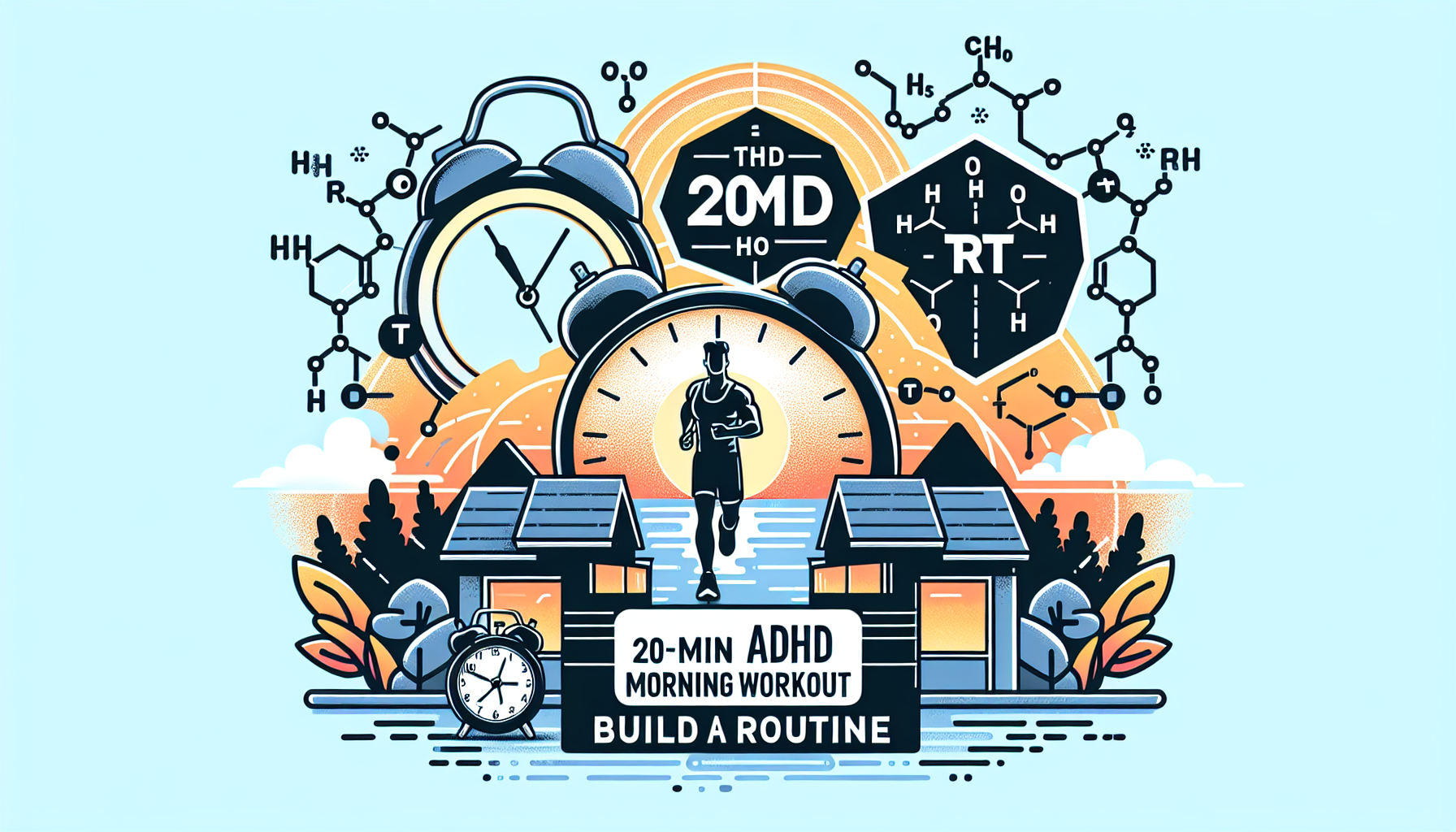
Starting your day with movement can dramatically improve focus, energy, and mood for people with ADHD. A short, structured 20-minute routine reduces decision fatigue, provides stimulation that supports attention, and creates a repeatable habit you can stick with even on busy mornings.
This guide gives a complete, ADHD-friendly 20-minute morning workout you can do at home with minimal equipment. You will get a timed plan, progressions, motivation strategies, nutrition tips, and modifications for common barriers like low motivation, time pressure, or joint pain.
Why 20 minutes works for ADHD
Short workouts reduce the friction that often stops people with ADHD from exercising. A 20-minute session produces measurable neurochemical benefits – increased dopamine and norepinephrine – without overwhelming executive function.
Building novelty, immediate feedback, and clear external cues helps maintain interest. Use timers, playlists, or an accountability partner to add external structure that supports follow-through.
20-minute ADHD-friendly morning routine (step-by-step)
This plan uses three 6-minute blocks plus a 2-minute cool-down. You will alternate cardio bursts with strength moves to keep stimulation high and focus steady.
- 0:00-2:00 Warm-up
- 30 seconds marching in place or light jog
- 30 seconds arm circles and shoulder rolls
- 30 seconds hip hinges and leg swings
- 30 seconds dynamic lunges or step-outs
- 2:00-8:00 Block A – Strength focus
- 2 rounds: 40 seconds work, 20 seconds rest per exercise
- Exercise A: Bodyweight squats – aim for controlled tempo
- Exercise B: Push-ups or incline push-ups – hands on counter if needed
- Exercise C: Plank hold or high-plank shoulder taps
- 8:00-14:00 Block B – Cardio burst
- 4 rounds: 40 seconds work, 20 seconds rest
- Exercise A: Jumping jacks or low-impact step jacks
- Exercise B: Mountain climbers or fast knee drives
- 14:00-20:00 Block C – Strength & mobility
- 2 rounds: 40 seconds work, 20 seconds rest
- Exercise A: Reverse lunges or step-backs (alternate legs)
- Exercise B: Glute bridges or single-leg bridge progressions
- Finish with 30 seconds standing quad and hip flexor stretch
- 20:00-22:00 Cool-down
- Deep belly breathing – 5 breaths in and out slowly
- Quick shoulder and neck release
Use a visible countdown timer or phone with a clear alarm sound. The structure of 40-20 intervals keeps intensity manageable while creating frequent resets to help attention.
Example modifications and progressions
Not everyone can jump or bend easily in the morning. Here are practical swaps that keep benefits while reducing strain.
- Low-impact cardio: Replace jumping jacks with step jacks or march-in-place with high knees.
- Knee or incline push-ups: Perform push-ups with hands on a table or wall to reduce shoulder stress.
- Reduced volume: Change intervals to 30 seconds on, 30 seconds off if you feel fatigued.
- Progressions: Add resistance bands or 5-lb dumbbells as you get stronger, increase work time to 45 seconds, or add a third round to a block.
Nutrition and pre-workout tips for ADHD
Proper fuel helps attention and energy. If you need food before exercise, choose a small 100-200 calorie snack 15-30 minutes before starting.
- Examples: half a banana with a teaspoon of peanut butter, a small yogurt, or a slice of whole-grain toast.
- Caffeine can help focus. A small black coffee or tea 20-30 minutes before exercise can increase alertness for many people.
- Hydration matters. Keep a water bottle visible and sip during short rests to maintain performance.
Motivation hacks tailored to ADHD
Consistency matters more than intensity. These tactics reduce friction and increase the chance you will do the workout.
- Decision friction: Lay out clothes and shoes the night before and set a single alarm labeled with the workout goal.
- Micro-start: Commit to just two minutes of movement. Most sessions continue once started.
- External accountability: Text a friend when you finish, use a streak-tracking app, or join a short online class at a set time.
- Novelty: Rotate playlists or alternate between three different 20-minute templates to keep interest high.
- Immediate reward: Attach a non-food reward you enjoy to completion, like 10 minutes of focused work time or a coffee brewed the way you like it.
Scheduling and habit formation
Repeated cues create habits. Pair your workout with an established morning ritual like brushing teeth, making the bed, or opening curtains.
Use a calendar or habit app to schedule the exact time. Treat the 20-minute slot as a meeting with yourself and block it from other commitments.
When progress stalls: troubleshoot fast
If you miss several days, do a reset instead of quitting. Drop the plan to a 5-minute movement session for two days, then scale back to 20 minutes.
Check sleep, medication timing, and stress levels. If mornings are consistently impossible, try a short evening or midday version of the routine instead.
Sample 4-week buildup plan
- Week 1: Follow the baseline 20-minute routine 3 times per week.
- Week 2: Increase to 4 sessions per week; add an extra round to Block A.
- Week 3: Add light resistance or increase work intervals to 45 seconds for one block.
- Week 4: Aim for 5 sessions per week, mixing morning and mid-day options for flexibility.
Track small wins: total sessions per week, minutes moved, or how your focus feels after workouts. These objective markers support continued practice.
Frequently Asked Questions
Can a 20-minute workout actually improve ADHD focus?
Yes. Short, consistent exercise increases dopamine and norepinephrine which support attention and executive function. Even 20 minutes of mixed cardio and strength can improve focus for several hours.
What if I have low motivation in the morning?
Use a micro-start strategy: commit to just two minutes and keep clothes ready the night before. External cues like a timer, an accountability text, or a planned playlist increase the chance you will continue past the two-minute mark.
Is this routine safe if I have knee or back pain?
Most moves can be modified for joint pain. Replace high-impact cardio with step jacks, use incline push-ups, and focus on mobility. If pain persists, consult a physical therapist for tailored modifications.
How often should I do this routine to see benefits?
Aim for 3-5 sessions per week. Consistency over several weeks produces the strongest improvements in mood, energy, and focus. Even three weekly sessions offer noticeable benefits.
Can I do this routine without any equipment?
Yes. The plan uses bodyweight exercises and can be done in a small space. Adding resistance bands or light dumbbells is optional for progression but not required.
What are quick ways to stay accountable?
Use a habit app to track streaks, schedule the workout as a calendar event, or pick a workout buddy to check in with by text after each session. Immediate feedback and visible tracking support ADHD motivation.
Conclusion
A focused, 20-minute ADHD-friendly morning workout is practical, effective, and sustainable when paired with simple habit strategies. Use the timed plan, modify where needed, and prioritize external cues to reduce decision fatigue.
Start with the micro-start method and aim for small consistency wins. Over 2-4 weeks you should notice better energy, improved mood, and sharper focus throughout your day.
Disclaimer
This blog is for informational and educational purposes only and does not constitute medical, mental health, or professional advice. The content provided focuses on fitness, exercise routines, lifestyle strategies, and general wellness information related to ADHD and overall performance. Individual abilities, health conditions, and responses to exercise may vary.
Always consult with a qualified healthcare provider or fitness professional before starting any new exercise program, making significant changes to your physical activity, diet, or routine, or if you have questions about your specific health or medical condition, including ADHD or other health concerns.
If you are experiencing a medical emergency, call 911 or your local emergency services immediately. The information on this website does not create a doctor-patient relationship and should not be used as a substitute for professional medical advice, diagnosis, or treatment.