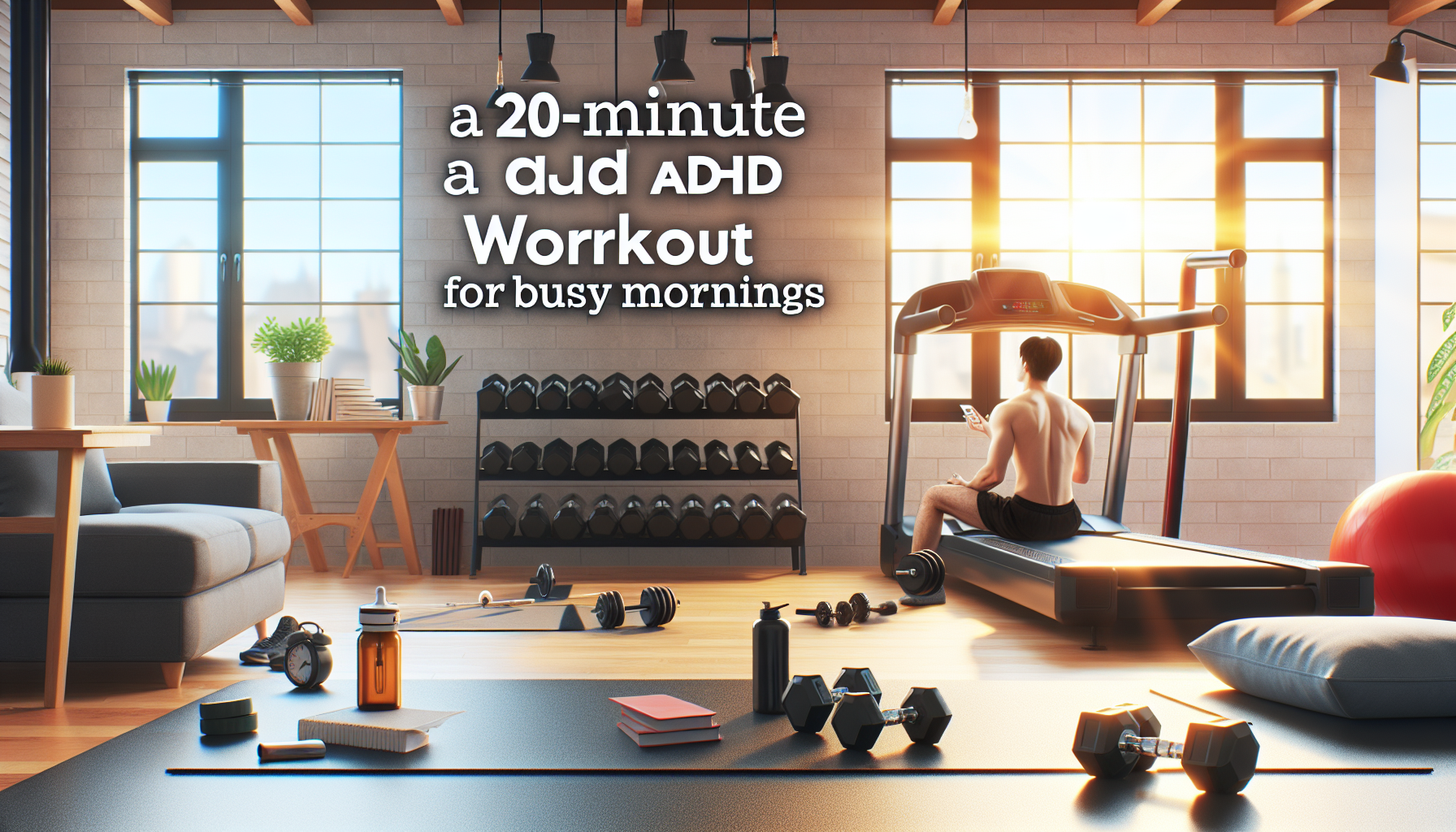
Many adults and teens with ADHD struggle to get consistent exercise into a packed morning. Low motivation, racing thoughts, and tight schedules make long workouts unrealistic. A focused, repeatable 20-minute routine can deliver reliable gains in focus, energy, and mood.
This post lays out a practical, ADHD-friendly 20-minute morning workout that is structured, easy to remember, and adaptable to different fitness levels. You will get a warm-up, a strength and mobility circuit, a short cardio burst, cool-down moves, and habit tips to make this routine stick.
Why a short, structured routine works for ADHD
Short workouts reduce friction and decision fatigue. They lower the activation energy needed to start exercising and increase the chance of daily consistency.
Structure and variety keep the brain engaged. Mixing strength, mobility, and cardio in 20 minutes prevents boredom while producing neurochemical benefits for attention and mood.
Principles to follow
- Keep transitions minimal so you do not lose momentum between exercises.
- Use time blocks rather than fixed reps – 30-45 seconds per movement suits fluctuating attention.
- Prioritize movement quality over speed to reduce injury risk and maximize brain benefits.
- Anchor the routine to a morning cue like brushing teeth or brewing coffee to build habit consistency.
Equipment and space
This routine requires minimal equipment and fits in a small area. Useful items include a mat, a light pair of dumbbells or a resistance band, and a timer or phone alarm.
If you have no equipment, bodyweight versions work well. The plan below includes simple substitutions.
The 20-minute ADHD-friendly morning workout
Set a timer for 20 minutes and move continuously through each block. Adjust intervals to 30 seconds for beginners or 45 seconds for more challenge. Rest 15-30 seconds between blocks if needed.
Warm-up – 3 minutes
- 30 seconds: March or jog in place to raise heart rate.
- 30 seconds: Arm circles – 15 seconds each direction.
- 30 seconds: Hip hinges – slow, focusing on glute activation.
- 60 seconds: Dynamic lunges or standing leg swings – alternate legs.
Strength and mobility circuit – 10 minutes
Do two rounds of the following 5 movements. Each movement 40 seconds on, 20 seconds transition. If 40/20 feels long, use 30/15.
- Squat to chair or box – sit lightly then stand, focus on depth and control. (No equipment)
- Push-up or incline push-up – hands on wall or countertop to scale intensity.
- Single-leg Romanian deadlift – balance-focused hip hinge, hold dumbbell or band if available. Alternate legs each round.
- Plank with shoulder taps – maintain a steady core and alternating taps.
- Resisted band row or bent-over dumbbell row – squeeze shoulder blades each rep.
Cardio burst – 4 minutes
High engagement short cardio improves alertness and burns off excess nervous energy. Pick one option and perform 20 seconds on, 10 seconds off for 4 rounds x 1 minute, or do two 2-minute options.
- Option A: Jumping jacks or star jumps.
- Option B: High knees marching or running in place for lower impact.
- Option C: Fast mountain climbers or step-ups for variety.
Cool down and quick mobility – 3 minutes
- 60 seconds: Deep diaphragmatic breathing and neck rolls.
- 60 seconds: Hamstring and quad stretch – 30 seconds each side.
- 60 seconds: Child pose or spinal twist to calm the nervous system.
Sample weekly plan for sustainable gains
For ADHD brains, variety and predictability both matter. Alternate intensity days and anchor the sessions to consistent morning cues.
- Monday: 20-minute routine – moderate intensity.
- Tuesday: Active recovery – 15-20 minute walk or mobility flow.
- Wednesday: 20-minute routine – increase resistance or interval length slightly.
- Thursday: Yoga or stretching – 20-30 minutes focused on breath.
- Friday: 20-minute routine – add a 5-minute balance challenge.
- Weekend: One longer 30-45 minute session if time allows or two short 20-minute sessions.
Tracking progress and staying motivated
Use simple, immediate feedback to make progress visible. ADHD-friendly tracking removes ambiguity and rewards consistency.
- Check off days on a calendar or habit app immediately after finishing.
- Record one metric three times per week: perceived energy, focus score, or number of completed rounds.
- Set a short-term reward for a seven-day streak, such as a favorite healthy snack or a social activity.
Nutrition and recovery tips to boost results
Small nutrition shifts support morning workouts and sustained focus. Aim for a balanced pre-work snack if needed and a protein-rich meal after exercise.
- Pre-work: 100-200 calories of carb plus protein – banana with peanut butter or yogurt with berries.
- Post-work: 20-30 grams of protein and some carbs within 60 minutes – eggs and toast or smoothie with protein powder.
- Hydration: Drink 250-500 ml of water upon waking and sip during the routine.
Modifications for common challenges
If mornings are unpredictable, split the routine into two 10-minute sessions – one before work and one after lunch. Consistency beats intensity every time.
Low energy days call for lighter options: reduce intervals to 30 seconds and focus on mobility and breathing. On high-energy days, increase intensity or add resistance.
Quick motivational strategies specific to ADHD
- Use a visible cue: lay out shoes and a water bottle where you will see them first thing.
- Leverage novelty: swap one exercise each week to prevent boredom.
- Pair exercise with a dopamine booster: 5 minutes of upbeat music to start works well.
Frequently Asked Questions
What is an ADHD-friendly workout routine?
An ADHD-friendly workout routine is short, structured, and varied to reduce boredom and decision fatigue. It uses time-based intervals, simple transitions, and predictable cues to make starting and sticking with exercise easier.
Is 20 minutes enough exercise for ADHD?
Yes, 20 minutes of focused movement can improve attention, mood, and energy when done consistently. Short daily sessions often yield better adherence and brain benefits than irregular longer workouts.
When is the best time to do this routine for focus?
Morning sessions often set the tone for better focus throughout the day, but the best time is when you can reliably perform the routine. Some people benefit from a mid-afternoon burst to counteract energy dips.
Can I do this routine without equipment?
Absolutely. The plan uses bodyweight versions of squats, lunges, push-ups, planks, and cardio bursts that need no equipment. Adding light dumbbells or a resistance band is optional for progression.
How often should I progress the routine?
Progress every 2-4 weeks by increasing interval length, adding resistance, or adding an extra round. Small, measurable steps reduce overwhelm and support steady gains.
What other habits support ADHD fitness results?
Consistent sleep, regular meal timing, short planning sessions, and minimal decision-making around workouts support long-term adherence. Using reminders and visible cues also improves consistency.
Conclusion
A 20-minute ADHD-friendly workout for busy mornings is realistic, evidence-based, and designed to improve focus and mood with minimal friction. Follow the structured routine, anchor it to a morning cue, and track simple progress markers to build a reliable habit.
Start small, adjust to your energy, and prioritize consistency. Over time, these short sessions will compound into better daily focus, steadier moods, and improved productivity.
Disclaimer
This blog is for informational and educational purposes only and does not constitute medical, mental health, or professional advice. The content provided focuses on fitness, exercise routines, lifestyle strategies, and general wellness information related to ADHD and overall performance. Individual abilities, health conditions, and responses to exercise may vary.
Always consult with a qualified healthcare provider or fitness professional before starting any new exercise program, making significant changes to your physical activity, diet, or routine, or if you have questions about your specific health or medical condition, including ADHD or other health concerns.
If you are experiencing a medical emergency, call 911 or your local emergency services immediately. The information on this website does not create a doctor-patient relationship and should not be used as a substitute for professional medical advice, diagnosis, or treatment.