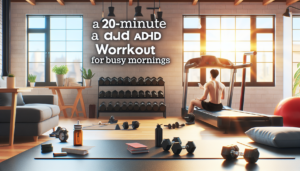
Many people with ADHD struggle to start the day with consistent energy and focus. A short, structured morning workout can provide a predictable cue, trigger dopamine release, reduce morning brain fog, and set up the rest of your day for better attention and mood.
This post gives a compact, evidence-informed 20-minute ADHD-friendly routine you can do at home with minimal equipment. You will get exact timings, exercise choices, progress options, and habit strategies to make the routine stick.
Read on for warm-up and circuit details, modifications, weekly scheduling tips, and nutrition and motivation strategies that work for ADHD brains.
Why a 20-minute routine works for ADHD
Short workouts reduce decision fatigue and lower the activation energy needed to start. For people with ADHD, structure, novelty, and immediate feedback are key to maintaining motivation.
A 20-minute format balances intensity and practicality. It is long enough to raise heart rate and improve circulation to the brain, but short enough to be consistent on busy mornings.
How to use this routine: rules and tools
Follow these simple rules to get the most benefit. First, pick a consistent cue: a specific alarm tone, a glass of water, or putting on training shoes right after brushing teeth.
Second, use timers and visual prompts. Set a 3-minute warm-up timer, a circuit timer for 12 minutes, and a 5-minute cooldown timer. Third, prepare gear the night before to remove friction.
- Timers: Use phone timers or a simple interval app with labeled intervals.
- Gear: Optional dumbbells (5-20 lb), resistance band, yoga mat.
- Accountability: Buddy check-ins, habit-streak apps, or morning calendar blocks.
Complete 20-minute ADHD morning workout
This plan divides the session into warm-up, focused circuit work, and cooldown. Each phase has short, clear instructions so you never have to think too much while exercising.
0-3 minutes: Warm-up (3 minutes)
Get circulation moving and prime the nervous system for movement. The warm-up lowers injury risk and helps your brain shift from sleep mode to active mode.
- 30 seconds: March or light jog in place.
- 30 seconds: Arm circles and shoulder rolls.
- 30 seconds: Dynamic hip swings and leg swings (each leg 15 seconds).
- 90 seconds: 3 sets of 5 bodyweight squats and 5 incline push-ups at controlled tempo, 10 seconds rest between sets.
3-15 minutes: Circuit block (12 minutes)
Do three 4-minute rounds. Each round includes two strength moves and one cardio burst. Keep transitions under 15 seconds. Use a timer that beeps every 4 minutes to reset focus.
- Round structure (4 minutes): 30 seconds exercise A, 15 seconds rest, 30 seconds exercise B, 15 seconds rest, 30 seconds cardio burst, 60 seconds active recovery or light core work.
Example exercises:
- Exercise A (strength): Goblet squats with dumbbell or air squats if no weight.
- Exercise B (strength): Bent-over single-arm row with band or dumbbell, alternate arm each round.
- Cardio burst: High knees, mountain climbers, or jumping jacks – push intensity so breathing increases but you stay safe.
Active recovery options: 30-second plank, 30-second glute bridge, or slow walking in place. These recoveries provide movement variety while keeping the session productive.
15-20 minutes: Cooldown and breath work (5 minutes)
Cooldown helps the nervous system down-regulate and consolidates the mental benefits. End the workout with focused breathing to extend improved concentration into the first work task.
- 2 minutes: Light walking or marching and forward fold to ease hamstrings.
- 2 minutes: Standing quad stretch and cross-body shoulder stretch, 30 seconds per side.
- 1 minute: Box breathing – inhale 4, hold 4, exhale 4, hold 4. Repeat 3 times.
Progression and alternatives
Progress slowly to avoid burnout. Use the following progression model: increase intensity, add weight, or reduce rest as your fitness improves. Don’t change more than one variable at a time.
- Week 1-2: Follow the routine exactly to build habit and consistency.
- Week 3-4: Add 5-10 seconds to cardio bursts or increase dumbbell load by 2-5 lb.
- Week 5+: Swap in more complex moves like reverse lunges or single-leg Romanian deadlifts on strength days.
If you have limited mobility or pain, substitute low-impact cardio like cycling or brisk walking and replace jumps with step-ups on a sturdy surface.
Weekly plan and habit-building tips
Consistency beats intensity for ADHD habit formation. Use a simple weekly template and keep variation within predictable bounds.
- Days 1, 3, 5: 20-minute morning routine as outlined.
- Days 2, 4: Light movement or mobility work – 10-15 minutes focusing on flexibility or yoga.
- Day 6: Optional longer workout – 30-45 minutes if energy allows.
- Day 7: Active recovery or rest.
To build the habit, use implementation intentions: write exactly when and where you will do the routine. For example, “After my 7:00 AM alarm, I will drink a glass of water and start the 20-minute workout in the living room.” Use visual cues like placing shoes or a mat by your bed.
Motivation strategies that fit ADHD brains
Short-term rewards and novelty help maintain engagement. Combine external structure with intrinsic goals to keep the routine meaningful.
- Use a visible streak tracker to capitalize on momentum.
- Change one exercise each week to add novelty while keeping the same structure.
- Pair workouts with a small reward like a favorite playlist only used during exercise.
Nutrition and timing tips for morning energy
Simple nutrition tactics amplify the workout benefit. Aim for a light pre-workout snack if you wake hungry and a balanced post-workout breakfast for stable energy.
- Pre-workout: Small snack of 100-150 calories like a banana or yogurt if you need fuel within 30-60 minutes.
- Post-workout: Protein plus complex carbs within 60 minutes, for example eggs and oatmeal or a protein shake with fruit.
- Hydration: Start with 8-12 oz water before exercise and continue sipping after the session.
Practical examples and time-saving tips
If mornings are chaotic, batch prep the night before. Lay out gear, prepare breakfast components, and schedule the workout as a calendar event with a 5-minute reminder.
For travel or hotel mornings, do a bodyweight-only version: air squats, push-ups on a countertop, and stair climbs for the cardio bursts. You can preserve structure and still hit the neurochemical benefits.
Safety and medical considerations
Check with a healthcare provider before starting a new exercise program if you have medical conditions or take medication that affects heart rate or heat regulation.
If ADHD medication increases heart rate, monitor perceived exertion and choose lower impact cardio or longer rest periods until you know how your body responds.
Frequently Asked Questions
How often should I do this 20-minute ADHD workout?
Aim for three sessions per week as a minimum to build habit and see cognitive benefits. For greater gains in fitness and mood, increase to five mornings per week while maintaining at least one active recovery day.
Will a 20-minute workout actually improve my focus?
Yes, short bursts of moderate to high intensity exercise increase blood flow and dopamine release, which can sharpen attention for several hours. The effect is strongest when the workout becomes a consistent routine.
What if I wake up unmotivated or forget to exercise?
Use implementation intentions and physical cues to lower friction, such as placing your shoes next to the bed. If you miss a morning, do a quick 10-minute version later to keep the habit intact and reduce guilt.
Do I need equipment to follow this routine?
No, the routine works with bodyweight moves only, though light dumbbells or a resistance band add strength progression options. Travel-friendly versions are effective and maintain structure.
When is the best time to exercise for ADHD symptoms?
Morning workouts often provide the most consistent benefit for planning and attention through the day, but the best time is when you can be consistent. Afternoon exercise can also improve focus and reduce restlessness.
Can exercise replace ADHD medication?
Exercise is a powerful complementary strategy but not a replacement for medication when medication is clinically indicated. Discuss any medication changes with your prescribing clinician and use exercise as part of a broader management plan.
Starting small and keeping the routine predictable are the two most important steps. Use the 20-minute plan for at least two weeks to evaluate improvements in mood, energy, and focus. Tweak intensity and exercises to fit your equipment and any physical limitations.
Ready to build a consistent morning habit? Prepare your gear tonight, set three timers, and commit to the 20-minute plan for 14 days to create momentum and clearer mornings.
Disclaimer
This blog is for informational and educational purposes only and does not constitute medical, mental health, or professional advice. The content provided focuses on fitness, exercise routines, lifestyle strategies, and general wellness information related to ADHD and overall performance. Individual abilities, health conditions, and responses to exercise may vary.
Always consult with a qualified healthcare provider or fitness professional before starting any new exercise program, making significant changes to your physical activity, diet, or routine, or if you have questions about your specific health or medical condition, including ADHD or other health concerns.
If you are experiencing a medical emergency, call 911 or your local emergency services immediately. The information on this website does not create a doctor-patient relationship and should not be used as a substitute for professional medical advice, diagnosis, or treatment.