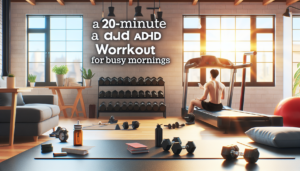
Starting a short, structured strength routine in the morning can be one of the most effective ways to manage ADHD symptoms like low focus, inconsistent energy, and morning inertia. This guide gives a practical, evidence-informed 20-minute routine designed for people with ADHD who need clear steps, low-friction setup, and measurable progress.
The routine focuses on strength, short cardio bursts, and cues that reduce decision fatigue. You will get a warm-up, two circuits, a cardio burst, a quick cool-down, and habit tips that make consistency realistic. Follow the sample 4-week progression and use the tracking and motivation hacks to turn this into a sustainable habit.
Why a 20-minute strength routine works for ADHD
Short, intense sessions reduce the barrier to starting and fit into busy or inconsistent mornings. Strength work improves executive function, mood regulation, and daytime energy by boosting norepinephrine and dopamine. When paired with short cardio bursts, you also get increased blood flow to the brain for better focus.
Using a fixed template and timers reduces decisions. When your plan is simple and repeatable, you will rely less on motivation and more on routine. This approach is ideal for people who struggle with planning, focus, and follow-through.
Principles to follow
- Keep it predictable but slightly varied. Use the same structure each day with small, weekly changes.
- Prioritize compound moves that work multiple muscle groups to get more return for time invested.
- Use timers for sets, rest, and short cardio bursts to create external structure.
- Limit equipment to one or two items like a kettlebell or set of dumbbells and a jump rope for easy setup.
- Use cues such as music, a visible checklist, or a placed towel to trigger the routine.
Warm-up (3 minutes)
Keep the warm-up dynamic and purposeful. The goal is to raise core temperature and prepare joints without wasting time.
- 30 seconds of easy jump rope or marching in place.
- 30 seconds of hip hinges (bodyweight good mornings) to wake posterior chain.
- 30 seconds of arm circles plus 30 seconds of world’s greatest stretch (alternating)
- 1 minute of bodyweight squats or half-squats, steady pace.
Core 20-minute routine overview
Structure the session into two 7-minute circuits and a 3-minute cardio burst. Use 40 seconds work, 20 seconds rest in each interval. A simple timer app or interval beep works well.
Circuit A: Strength focus (7 minutes)
Repeat the following 2 rounds of 40s on, 20s off. Move between exercises without reset. Aim for controlled reps and solid form.
- Goblet squat (hold kettlebell or dumbbell at chest) x40s
- Push-ups or incline push-ups x40s
- Single-arm kettlebell swing or dumbbell hinge x40s (alternate arm each round)
If you need lower impact, replace swings with glute bridges. Keep tempo steady and stop when form breaks.
Transition: 30 seconds active recovery
Walk around, shake arms, sip water. Use a checklist to mark Circuit A complete. This small win helps executive function stay engaged.
Circuit B: Upper + core (7 minutes)
Two rounds of 40s on, 20s off. Choose weights that allow 10-18 reps in 40 seconds with full range of motion.
- Bent-over dumbbell rows (single-arm alternate) x40s
- Overhead press or dumbbell floor press x40s
- Plank to alternating shoulder taps x40s
Focus on breathing and quick setup between movements. Keep a towel and water nearby to minimize excuses to stop.
Cardio burst (3 minutes)
This is a short, high-engagement finisher to spike heart rate and increase alertness.
- 30 seconds hard – jump rope or high knees
- 30 seconds easy – gentle march or step touch
- Repeat sequence three times for a total of 3 minutes
If jump rope causes joint pain, do mountain climbers at a controlled pace. The goal is short, intense work that is easy to start and stop.
Cool-down and mobility (2 minutes)
Finish with breathing and mobility to reset focus for the day.
- 60 seconds of diaphragmatic breathing while seated or standing.
- 60 seconds of hamstring and chest opener stretches, 30 seconds each side.
4-week progression example
Progress by small, measurable changes each week. Increase one variable only: sets, weight, or work time. Keep rest constant to maintain habit strength.
- Week 1: Follow the 40/20 protocol with bodyweight or light weight.
- Week 2: Increase weight by 5-10 percent for strength moves or add one extra 40s block to Circuit A.
- Week 3: Reduce rest to 15 seconds or add a third round to Circuit B if energy allows.
- Week 4: Increase intensity for cardio burst to 40s on, 20s off, or add a second 3-minute burst.
Track one simple metric each session: total rounds completed, average perceived exertion, or weight used. This removes ambiguity and supports focus.
Modifications and accessibility
If mornings are rushed or medication timing varies, use these options.
- 40/20 to 30/30 change: Lower intensity but keep structure when sleepy.
- Chair or bed-assisted versions: Use seated squats and incline push-ups for low mobility days.
- No equipment: Replace weights with filled backpacks, water jugs, or resistance bands.
Behavioral cues to build consistency
ADHD-friendly cues reduce reliance on willpower. Use these practical strategies.
- Make the routine visually obvious: lay out clothes and equipment the night before.
- Use a single audible timer sound that signals the entire session flow.
- Pair the routine with another morning habit like coffee or a shower to create a habit chain.
- Reward immediate wins: mark a calendar, check an app, or give yourself a five-minute focused task afterward.
Nutrition and recovery tips
Fueling and recovery support focus and energy. Keep pre-workout intake small and consistent.
- Pre-workout: 150-250 calories with a mix of protein and carbs if you need energy; a banana with nut butter is a reliable option.
- Post-workout: 20-30 grams of protein within two hours to support recovery and stabilize blood sugar.
- Hydration: Start the day with a glass of water and sip during the session to reduce fatigue.
Sample weekly schedule
Use this simple plan to balance intensity and recovery.
- Monday: 20-minute routine (strength focus)
- Tuesday: Active recovery or 10-minute mobility
- Wednesday: 20-minute routine
- Thursday: Short walk or light cardio
- Friday: 20-minute routine
- Weekend: Two active days, one rest day
Tracking progress and staying motivated
Keep tracking simple and rewarding. Use a habit tracker with checkboxes and one metric to improve each week.
Celebrate small wins and avoid all-or-nothing thinking. If you miss a morning, do a 10-minute version later. The most important measure is consistency over weeks, not perfection each day.
Frequently Asked Questions
How soon will I notice ADHD symptom improvements?
Many people report improved alertness and mood the same day after a short strength and cardio session. Consistent changes in focus and executive function typically appear after 3 to 6 weeks of regular exercise, especially when combined with good sleep and nutrition.
Can I do this routine if I take stimulant medication?
Yes. In fact, exercise and medication are often complementary. Time your session when medication peaks if it helps with focus, but a gentle version before medication can also reduce decision fatigue. Check with your healthcare provider for personalized advice.
What if I only have 10 minutes in the morning?
Do a condensed version: one 7-minute circuit plus a 3-minute cardio burst. Keep the same structure and timers. Short, consistent sessions still provide cognitive benefits and help build routine momentum.
Do I need a gym or special equipment?
No. You can use a kettlebell, dumbbell, or household items like water jugs. Bodyweight options are effective for strength maintenance and improving focus. Minimal equipment keeps setup low-friction.
How do I prevent boredom or loss of motivation?
Introduce small variations each week, change the music playlist, or switch the order of circuits. Use external accountability like a workout buddy or an app. Short-term micro-goals like increasing rounds or weight maintain novelty while keeping structure.
Is strength training better than cardio for ADHD?
Both are valuable. Strength training improves executive function and mood stabilization, while cardio increases immediate alertness and blood flow to the brain. Combining both in a short routine gives balanced benefits.
Conclusion
This 20-minute ADHD morning strength routine is designed to be low-friction, structured, and progressive. Use timers, visible cues, and a single tracking metric to reduce decision fatigue and build consistency. Start with the basic template, progress slowly each week, and prioritize habit triggers over motivation.
Small, consistent actions compound into big improvements in focus, energy, and daily productivity. Try the routine for four weeks, track one metric, and adjust based on what helps you start and stay consistent.
Disclaimer
This blog is for informational and educational purposes only and does not constitute medical, mental health, or professional advice. The content provided focuses on fitness, exercise routines, lifestyle strategies, and general wellness information related to ADHD and overall performance. Individual abilities, health conditions, and responses to exercise may vary.
Always consult with a qualified healthcare provider or fitness professional before starting any new exercise program, making significant changes to your physical activity, diet, or routine, or if you have questions about your specific health or medical condition, including ADHD or other health concerns.
If you are experiencing a medical emergency, call 911 or your local emergency services immediately. The information on this website does not create a doctor-patient relationship and should not be used as a substitute for professional medical advice, diagnosis, or treatment.