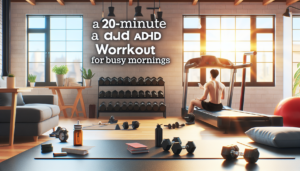
Most people with ADHD face the same obstacles when trying to exercise: inconsistent motivation, racing thoughts, and trouble committing to long sessions. A short, structured workout can deliver neurochemical benefits without demanding long attention spans. This post gives a practical, ready-to-use 20-minute ADHD workout routine you can repeat daily or adapt for 3-5 sessions per week.
Below you will find a step-by-step plan, timing cues, options for home or gym, and habit-building strategies that help turn a small routine into a reliable habit. The routine focuses on improving focus, energy, and mood regulation through strength, cardio, and movement patterns that keep novelty and momentum high.
Why a 20-minute routine works for ADHD
Short workouts reduce start-up friction and match common attention windows for many people with ADHD. Research shows brief, regular exercise raises dopamine and norepinephrine, which improves focus and mood. In practice, that means a focused 20-minute session can have outsized benefits for daily productivity.
Another reason is momentum. Small wins build confidence. If you finish 20 minutes most days, you create a cue-action-reward loop that supports long-term adherence. Use external cues and timers to automate the routine and lower the chance of distraction.
Structure of the 20-minute ADHD workout
This plan splits the session into a quick warm-up, a focused strength and cardio block, and a short cool-down. Each block uses timers, clear rep counts, and movement variety to maintain interest. You can scale intensity up or down based on energy and sleep quality.
0-3 minutes: Efficient warm-up
Start with dynamic movements that increase heart rate and joint mobility. Follow this mini-circuit once, with each exercise for 30-45 seconds.
- March or jog in place – 45 seconds
- Arm circles and shoulder rolls – 30 seconds
- Hip hinges or bodyweight good mornings – 30 seconds
- World’s greatest stretch (lunge with a twist) – 30 seconds
Using a simple 3-minute warm-up primes the brain and reduces decision fatigue. Set a visible timer or use an app that vibrates after each segment.
3-16 minutes: Focused block – strength + cardio intervals
The core of the routine alternates strength-focused moves with short bursts of cardio to keep dopamine levels up and prevent boredom. Use 8 rounds of 90 seconds each, or 3 rounds of 4 exercises if you prefer a set-based approach.
- Circuit option (8 x 90 seconds): 50 seconds work, 40 seconds transition/rest. Alternate between strength and cardio moves. Example sequence: push or squat variation, jump rope or high knees, hinge or row, quick shuffle or mountain climbers.
- Set option (3 rounds): 30 seconds strength move, 30 seconds cardio, 30 seconds alternate strength, then 30 seconds rest. Repeat for 3 full rounds.
Examples of paired moves:
- Bodyweight squats + 30 seconds of fast feet
- Push-ups (knees or incline) + 30 seconds of mountain climbers
- Dumbbell Romanian deadlift (or single-leg RDL) + 30 seconds of jumping jacks
- Banded rows or bent-over rows + 30 seconds of quick step taps
Choose 2-4 pairs you like and rotate through them. The variety keeps the brain engaged and reduces the temptation to zone out.
16-20 minutes: Recovery and deliberate cool-down
Finish with 3-4 minutes of slow movement and breathing to consolidate focus and reduce post-exercise restlessness. Use mobility and breathing to reset your nervous system.
- Standing hamstring stretch or pigeon stretch – 60 seconds
- Chest opener and scapular glue – 60 seconds
- Box breathing or 4-4-4 breathing – 60 seconds
Ending with a clear ritual, like a single deep breathing set, signals completion and supports habit formation.
Practical adaptations and progression
Adapt the routine to energy levels, environment, and equipment availability. If you have low energy, reduce work intervals to 30 seconds and extend rest to 45-60 seconds. If you are wired, increase intensity but keep total time the same.
Progress by adding load, increasing work time, or changing complexity. For example, after 4 weeks increase strength exercise difficulty (add dumbbells or unilateral variations) or replace a cardio burst with a hill sprint if outdoors.
ADHD-friendly habit hacks
Making the routine sticky requires designing the environment and cues. Use external prompts and simplify decisions to overcome avoidance.
- Visible gear: Lay out shoes and clothes the night before so your brain has fewer choices in the morning.
- Accountability: Pair up with a friend or use a coach app that tracks 20-minute sessions and sends reminders.
- Timers and alarms: Use 3-4 timers for warm-up, intervals, and cool-down. Sounds and vibrations help reorient attention.
- Micro-commitments: Promise yourself one block. Often you will continue after the first block because of momentum.
Consistency beats intensity. A 20-minute session most days produces better symptom control than sporadic 60-minute workouts.
Nutrition and timing for focus
Simple pre-workout nutrition stabilizes energy and supports performance. Aim for a light snack 30-60 minutes before, with a mix of carbohydrate and protein.
- Examples: banana with peanut butter, Greek yogurt with berries, or a small whole-grain toast with cottage cheese.
- Hydration: Drink 250-500 ml of water before starting, especially if you are dehydrated or caffeinated.
After the workout, prioritize a balanced meal within 1-2 hours. Protein and complex carbs support recovery and sustain focus for the next work block.
Tracking progress and staying motivated
Use simple metrics to measure wins. Try a calendar checkmark system, a 12-week habit streak, or a three-question after-session journal: How did your focus change? Energy level? Mood?
Celebrate small milestones like 7 straight days, then 21 days. Reward consistency with non-food treats such as a new playlist, a massage, or a gear upgrade.
Equipment and space options
You do not need a gym. The routine works with bodyweight, one pair of dumbbells, a resistance band, or a jump rope. At the gym, add loaded squats or kettlebell swings for more stimulus.
Designate a small area at home with a mat, a visible timer, and a water bottle. Clear, consistent cues reduce friction and improve follow-through.
Frequently Asked Questions
How often should I do this 20-minute ADHD workout?
Aim for 3-5 sessions per week depending on energy and schedule. Daily 20-minute sessions work well for many people with ADHD because they build routine without overwhelming attention capacity.
Can a short 20-minute workout build muscle?
Yes, if you focus on progressive overload and resistance work, 20 minutes can build and maintain muscle. Use heavier weights, slower tempos, or more frequent sessions to increase stimulus over time.
What if I get distracted during the workout?
Use external cues like timers, audible prompts, or a workout partner to bring attention back. Break the session into micro-tasks and treat each block as a separate job to reduce the impact of distraction.
Is cardio or strength training better for ADHD symptoms?
Both help. Cardio quickly raises arousal and improves mood, while strength training supports long-term executive function and sleep. A combined routine with short cardio bursts and strength moves offers the best of both.
What should I eat before a morning workout to boost focus?
A small snack with carbohydrate and protein 30-60 minutes before exercise works well. Examples include a banana with nut butter or Greek yogurt with berries to provide steady energy without stomach discomfort.
How long until I notice improvements in focus and energy?
Many people report acute improvements in focus and mood after a single session. Sustainable benefits usually appear after 2-4 weeks of regular practice, especially when combined with consistent sleep and nutrition.
Disclaimer
This blog is for informational and educational purposes only and does not constitute medical, mental health, or professional advice. The content provided focuses on fitness, exercise routines, lifestyle strategies, and general wellness information related to ADHD and overall performance. Individual abilities, health conditions, and responses to exercise may vary.
Always consult with a qualified healthcare provider or fitness professional before starting any new exercise program, making significant changes to your physical activity, diet, or routine, or if you have questions about your specific health or medical condition, including ADHD or other health concerns.
If you are experiencing a medical emergency, call 911 or your local emergency services immediately. The information on this website does not create a doctor-patient relationship and should not be used as a substitute for professional medical advice, diagnosis, or treatment.